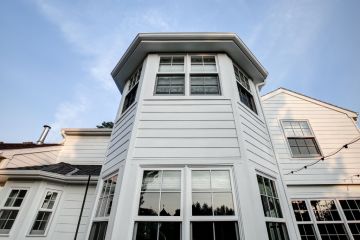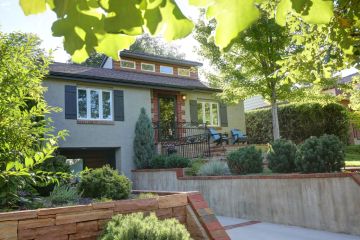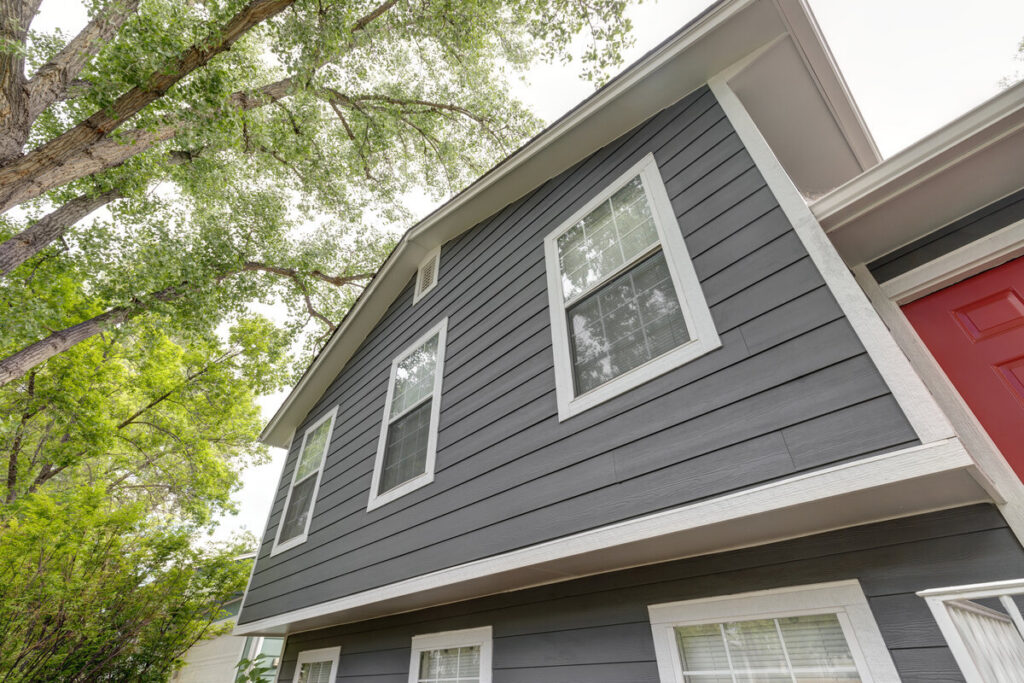
Fiber cement siding is used as a long-term exterior solution where durability, moisture control, and stability matter. Made from cement, sand, and cellulose fibers, it is designed to perform under continuous exposure without the common failures seen in other siding materials. The benefits of fiber cement siding become clear when evaluating how the material handles weather, fire exposure, and structural movement as part of a complete exterior system.
Why Homeowners Choose Fiber Cement Siding in Colorado
Colorado’s climate brings temperature swings, strong sun, wind, and seasonal moisture. Fiber cement siding resists moisture, fire, insects, and expansion better than wood, helping prevent warping and premature failure. For homeowners planning to stay long term, it offers reliable performance and consistent protection year after year.
Core Benefits of Fiber Cement Siding
Long-Term Durability and Life Expectancy
Fiber cement siding is known for its long service life. When installed correctly, it can last several decades with minimal issues. The material has been used in residential construction for more than a century, which gives homeowners proven performance rather than untested trends.
Key Takeaway: A long lifespan reduces replacement cycles and protects long-term home value.
Superior Resistance to Fire, Heat, and Extreme Weather
Fiber cement is non-combustible and does not ignite when exposed to flame or heat. It also holds up well in high winds, heavy rain, and temperature extremes, making it suitable for storm-prone regions.
Protection Against Moisture, Rot, and Warping
Unlike wood, fiber cement does not rot or warp when exposed to moisture. It absorbs far less water and maintains its shape over time, which helps prevent gaps, cracking, and structural issues behind the siding.
Design Flexibility for Custom Homes and Renovations
Authentic Wood-Look Without Wood’s Drawbacks
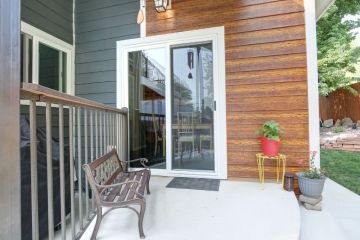
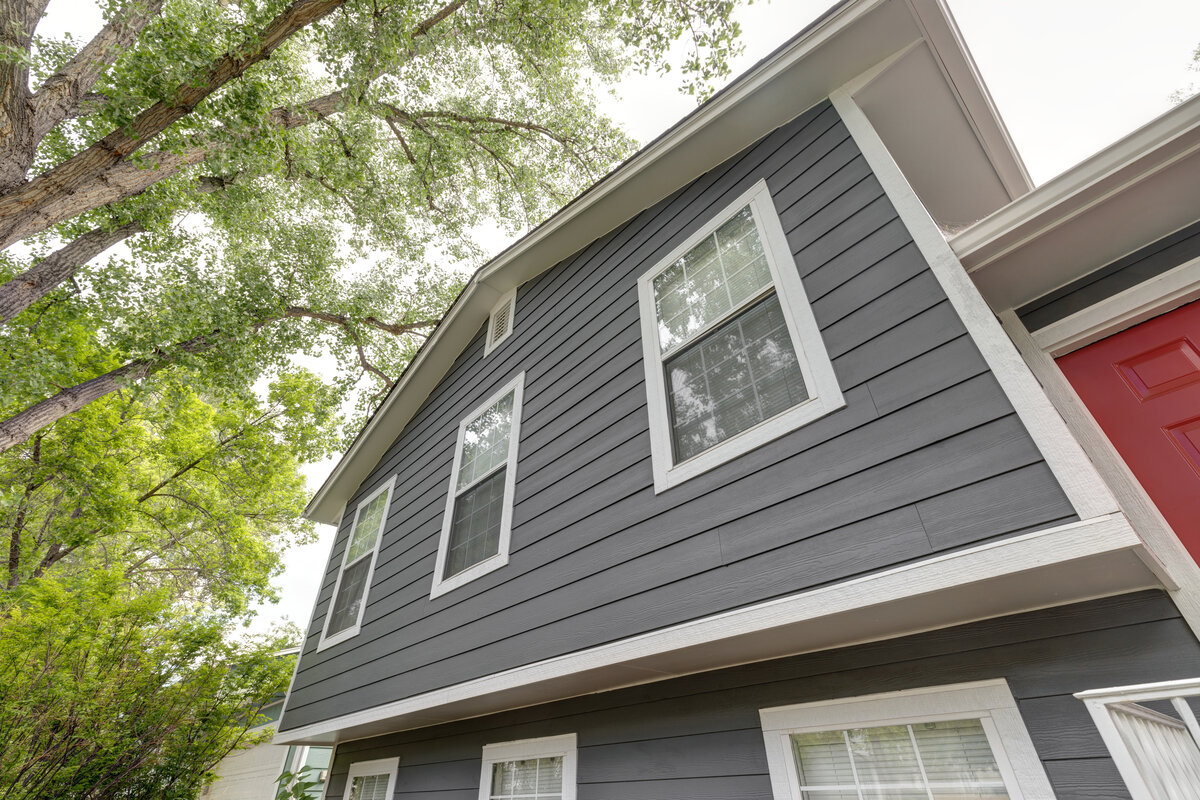
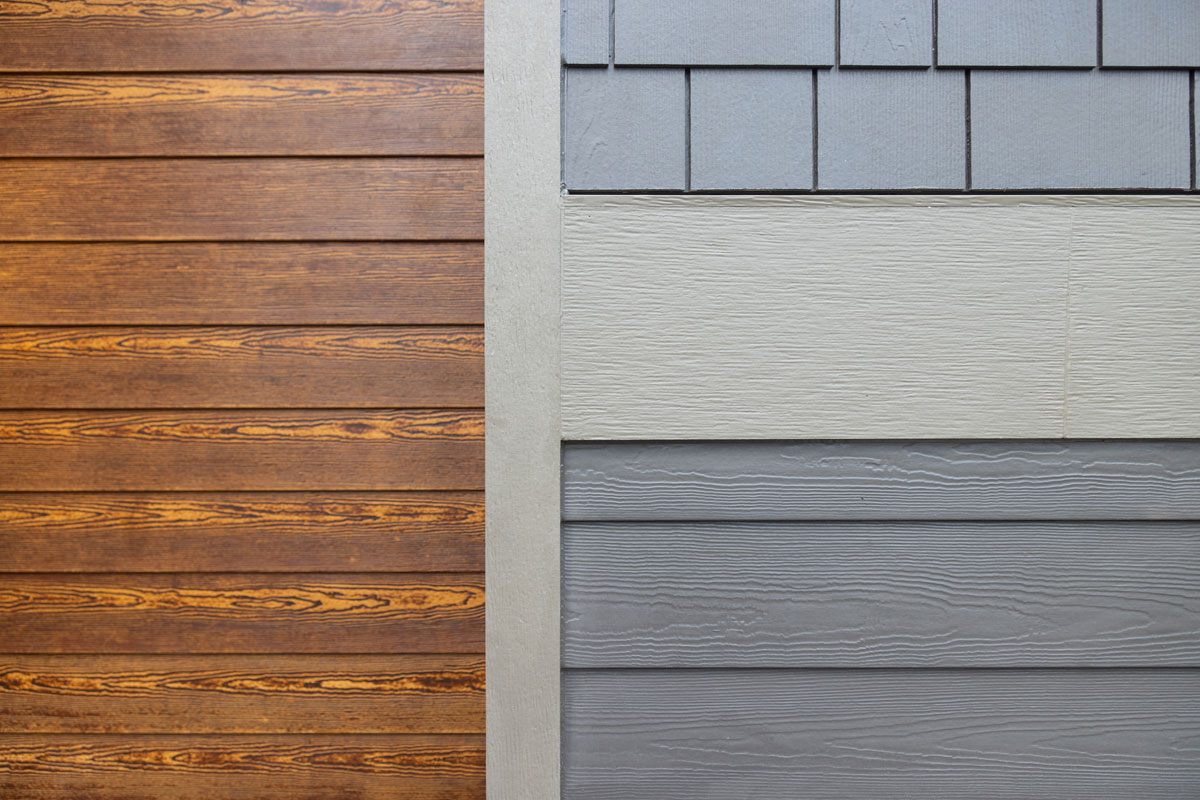
Many homeowners want the appearance of wood siding without the maintenance. Fiber cement replicates wood grain and texture closely while eliminating concerns about insects, rot, and frequent repainting.
Multiple Style and Profile Options
Fiber cement is available in a wide range of profiles, including:
- Lap siding
- Shingles and shakes
- Board-and-batten
- Vertical and horizontal designs
This flexibility allows us to match both traditional and modern architectural styles.
Panel Siding for Modern and Transitional Homes
Large-format fiber cement panels are increasingly popular for contemporary homes. Panels provide clean lines, fewer seams, and a refined appearance that works well in modern and transitional designs.
Pro Tip: Panel siding requires precise layout and fastening. Proper installation is critical to achieve a clean finish.
Installation Quality Matters More Than Material Alone
Installation Methods That Affect Appearance and Performance
Fastening methods, joint placement, and trim details all influence how fiber cement performs. Blind nailing, when appropriate, creates a cleaner look and helps protect fasteners from moisture exposure.
Factory-Finished vs On-Site Painted Fiber Cement
Homeowners can choose between factory-finished boards or on-site painting. Factory finishes provide consistent color and longer intervals between repaints. On-site painting allows for custom color selection and future flexibility.
Why Professional Installation Is Critical
Even the best siding material can fail if installed incorrectly. Proper flashing, moisture barriers, fastening patterns, and clearances are essential. Our team treats siding as part of a complete exterior system rather than a surface-level upgrade.
Maintenance, Cost, and Long-Term Value
Minimal Maintenance Compared to Wood
Fiber cement requires far less maintenance than wood siding. Occasional cleaning and periodic repainting are typically all that is needed to keep it looking its best.
Cost Considerations and Long-Term ROI
Fiber cement siding often costs more upfront than vinyl, but it delivers strong long-term value. Fewer repairs, longer lifespan, and improved resale appeal help offset the initial investment.
Strong Manufacturer and Workmanship Warranties
Many fiber cement products come with solid manufacturer warranties. When installed correctly, these warranties provide additional peace of mind and protect your investment.
Need expert help with siding replacement? Contact Bellwether Homes for a free consultation.
Sustainability and Building Standards
Made From Sustainable and Non-Toxic Materials
Fiber cement is made from cement, sand, and cellulose fibers. Its long lifespan reduces material waste over time, which supports sustainable building practices.
Approved for Historic and Regulated Builds
Fiber cement is often approved for historic renovations and HOA-regulated neighborhoods because it maintains traditional appearances while meeting modern performance standards.
Key Takeaway: Fiber cement balances appearance requirements with modern durability expectations.
Is Fiber Cement Siding Right for Your Home?
Ideal Use Cases
Fiber cement works especially well for:
- Full exterior renovations
- Custom homes
- Storm-resistant upgrades
- Homeowners planning long-term ownership
The benefits of fiber cement siding are most noticeable when durability and appearance matter equally.
When Another Siding May Be a Better Fit
Some homeowners prioritize the lowest upfront cost or prefer a different aesthetic. In those cases, other siding materials may be more appropriate. An honest evaluation helps ensure the right solution for each home.
Work With a Builder Who Understands Exterior Systems
Choosing the right siding is only part of the decision. Proper design, installation, and integration with roofing, windows, and trim determine how well the exterior performs over time. The benefits of fiber cement siding are fully realized when the system is planned and installed by experienced professionals.
If you are considering a siding upgrade or planning a new build, our team is ready to help. Contact Bellwether Homes to schedule a consultation and receive expert guidance tailored to your home and long-term goals.